
兵临城下
Can US afford cost of clean-energy protectionism in race for AI capabilities?_我的网站

A |
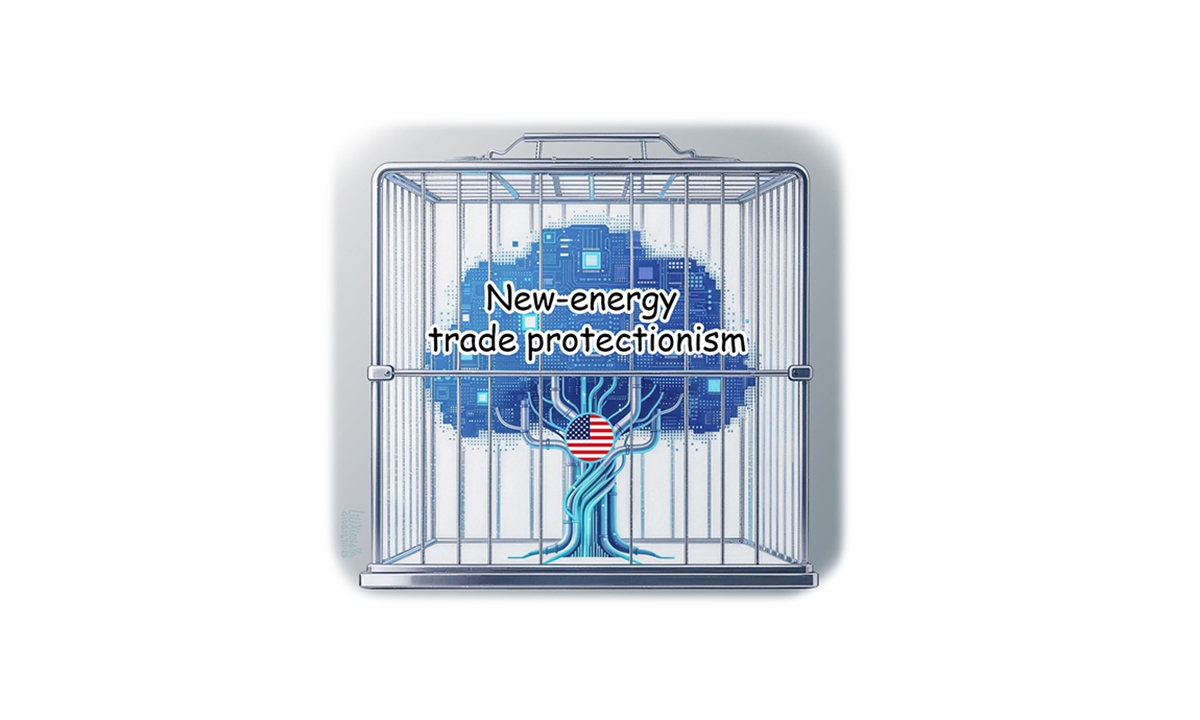
Recent media reports have questioned whether a natural gas plant built to power an Amazon data center project in Texas could become the largest climate polluter in the US. The controversy, whatever the eventual outcome, offers a reality check for America's artificial intelligence (AI) drive.
It exposes a growing contradiction: The US is racing to expand its AI capabilities, yet its protectionist trade policies are making it harder and more costly to access some of the clean-energy technologies needed to sustain that expansion. This raises a broader question: Can an energy-intensive AI race afford the costs of renewable energy protectionism?
The US is entering a new era of rising electricity demand. Data centers, the backbone of the AI economy, are emerging as one of the fastest-growing sources of power consumption. Much of that demand is still being met by fossil fuels: The International Energy Agency reports that natural gas supplies more than 40 percent of the electricity used by data centers in the US, making it their largest source of power.
So, it's not surprising that the expansion of data centers has raised concerns over their environmental impact and the pressure they could place on local power systems and electricity bills. A Gallup survey conducted in March found that seven in 10 Americans opposed the construction of AI data centers in their local area, including 48 percent who strongly opposed such projects.
The findings point to a broader challenge for the US: The race to develop AI is increasingly becoming a race to meet growing energy needs. Addressing this challenge will require more than advances in computing technology; it will also depend on an energy system capable of delivering large amounts of reliable, affordable and cleaner power. That, in turn, will require faster development and broader deployment of clean-energy technologies, from solar power to energy storage.
Yet in the clean-energy sector, the US has increasingly relied on protectionist trade measures that limit access to cost-competitive products from global markets. The country has placed greater emphasis on expanding domestic manufacturing capacity, but rebuilding entire clean-energy supply chains at home is a costly and time-consuming process. Even if expanded domestic production is achieved, it is likely to come at a higher cost, making the deployment of renewable technologies more expensive and potentially slower.
The solar industry offers a clear illustration of this policy direction. The US has continued to expand trade barriers in the sector. Reuters reported that the US government announced on Thursday a series of price floors and a 15 percent tariff on products made from polysilicon, a raw material used in solar panels.
The challenge lies in the limited scale of the US polysilicon industry. Reuters reported that the country has two polysilicon factories. Against this backdrop, relying on domestic polysilicon production while restricting access to imports runs counter to the goal of expanding solar power in the US. The country risks creating barriers that ultimately constrain its own access to the global supply chains needed for growth.
The pressing issue for the US is the speed at which new power demand is emerging. The expansion of data centers is creating electricity needs that cannot wait for domestic clean-energy capacity to develop gradually. Global supply chains can provide the scale and speed required in the near term. By narrowing access to these sources, the US risks turning clean-energy policy into a drag on the infrastructure needed for its AI race.
The US has placed AI high on its economic and technological agenda. The outcome of this race will matter greatly, as financial markets are also watching whether America can turn its AI efforts into commercial success.
This leaves the US with a difficult choice: Can it afford the cost of clean-energy protectionism while racing to build AI infrastructure? The answer may be no. Trade barriers that limit access to competitive renewable technologies could ultimately become a constraint on the AI expansion that Washington is seeking to accelerate.
The author is a reporter with the Global Times. [email protected]
。

B |
阿里云优惠券 先领券再下单 2025年6月19日,京东正式公布“618”年中购物节战报。数据显示,截至6月18日23:59,京东零售线上业务、线下业态及京东外卖整体订单量超22亿单,下单用户数同比增长超100%,京东App日活跃用户数(DAU)创历史新高。这一成绩不仅刷新了平台纪录,更凸显了AI技术、即时零售与下沉市场对消费增长的强劲拉动作用。 AI技术深度渗透:数字人直播成交额破140亿,智能体覆盖1.4万岗位 今年618期间,京东AI技术成为核心驱动力。大模型服务调用量环比去年“双11”增长130%,覆盖从3B到750B的全尺寸、多模态序列,全面赋能采销、客服、物流等环节。 数字人直播:超1.7万家品牌商家启用数字人主播,累计带动GMV超140亿元。新推出的“高定数字人”支持双人捧哏、换装走秀等互动玩法,从“闲时主播”跃升为直播间“C位”。智能体上岗:超1.4万个智能体在人力资源、客服、采销等岗位上岗,解决18%内部工作,显著提升运营效率。消费者体验升级:京东健康依托医疗大模型,实现看病买药全场景智能化;京东零售XR团队推出“裸眼3D广告”“3D智能居家搭配”等创新工具,用户通过手机即可获得沉浸式购物体验。即时零售爆发:外卖日订单破2500万,七鲜自有品牌销售增340% 京东外卖首次深度参与618,覆盖全国350个城市,日订单量突破2500万单,12万名全职骑手保障配送时效。与此同时,京东七鲜线上订单同比增长超150%,自有品牌商品销售增长340%。其中,与龙虎联名的“风油爆浆软糖”、6.18L皮尔森原浆啤酒等新品上市即爆火,成为年轻消费者追捧的“网红商品”。 下沉市场与国补政策共振:县域订单增长超130%,家电以旧换新成交额激增 今年618,京东通过“国补+平台补贴”双轮驱动,激活下沉市场消费潜力。 县域消费爆发:县域农村地区订单量同比增长超130%,用户数同比增长超140%。

C | 南昌市南昌县、菏泽市成武县分别成为消费力最强、增长最强区县。家电以旧换新:国家补贴叠加京东百亿补贴,推动空调、电视等品类销售爆发。

D | 百吋电视成交额同比增长260%,高温区域999元系列空调销售同比提升超120%。农产品上行:京东超市百亿农补项目带动2.6万款农产品销售增长,京喜自营“厂货百补”计划助力产业带商家,纸品订单量超1000万单。多元业态协同:3C数码门店成交额增2倍,服务订单量飙升 京东线下业态同样表现亮眼: 3C数码门店:全渠道成交额同比增长超2倍,手机、电脑品类成交额突破3倍增幅。河南省以6倍增速领跑全国,安徽省、山东省增幅超5倍。生活服务:京东自营家政服务成交额破亿,家电清洗、洗衣订单量分别同比增长211%、超10倍。物流升级:京东物流“提前送”通过大数据前置仓储,保障新品、爆品第一时间送达;“送装一体”订单同比增长超300%,覆盖全国100%区县。消费趋势洞察:AI硬件、国潮商品成新宠,健康场景智能化加速 京东618消费数据揭示四大趋势: AI硬件崛起:AI笔记本成交额同比增长151%,智能手表新品成交额增长301%。国潮文化复兴:热度TOP100品牌中超七成为中国品牌,“非遗元素”产品搜索量同比增长270%。健康场景智能化:京东健康AI京医累计服务用户超5000万,实现看病买药全链路智能化。即时满足需求增长:京东秒送依托O2O能力,推动摄影摄像品类成交额同比增长超3倍。未来展望:AI与即时零售持续赋能,构建消费新生态 京东集团CEO许冉表示,2025年618的突破性增长,验证了AI技术与即时零售对消费升级的双重价值。

E | 未来,京东将进一步深化大模型应用,推动数字人直播、智能体等工具的标准化输出;同时,加速即时零售网络下沉,计划年内新增5000家合作门店,覆盖更多县域市场。 结语 2025年京东618以“又好又便宜”为核心,通过AI技术、即时零售与下沉市场战略,实现了订单量与用户数的双重飞跃。这一成绩不仅为消费市场注入信心,更为行业提供了“技术+场景”深度融合的范本。随着AI与即时零售的持续进化,京东或将引领新一轮消费革命。
申请创业报道,分享创业好点子。点击此处,共同探讨创业新机遇!。
Current article:http://432yv.cuntoujuefourantapai.cfd/gbaf/20260826/4569696.html
Published on:14:43:24
 大渡口区举办“快乐8”游戏500万元大奖幸运站授牌仪式
 从重庆银行半年报看金融活水的“流向”与“力道”
 漳州台商区沙坂村驻村第一书记陈荞颖:“乡亲们日子好过了,咱就没白干”
 苹果正式推送iOS 16更新,已发送“信息”可编辑或撤回_App_锁定
 다양한 반도체 관련 전시물 살펴보는 관람객들
 商汤WAIC发布交付级AI全栈:模型、算力、机器人三线并进
- ·上半身〝ノーガード〟現役女性社長、藤渡小百合の大胆〝バックショット〟に「たまらないよ」「凄く惹き込まれてしまう」反響の声
- ·JD Gaming与Bilibili Gaming继续他们的季后赛征程
- ·到2030年,我国将基本建成现代农产品产地市场体系
- ·Depp Set to Return to Pirates of the Caribbean After Defamation Trial Win Against Heard - Report
- ·ST海王高管金戈增持1万股,增持金额1.59万元
- ·100%夺冠定律!詹姆斯复刻4次夺冠配方,76人夺冠底色早已成型
- ·千里科技:上半年净利润 0.78 亿元,同比增长151.25%
- ·技嘉多款 OLED 新品泄露:搭载一系列新规格面板
- ·广东省药监局提醒风油精清凉油别混用
- ·阿里巴巴港股上市以来首次启动新股配售!总金额800亿港元,所得款项净额将100%用于投资全栈AI能力
- ·मुकेश अंबानी की कंपनी की नई पेशकश; बैंक में पड़े पैसे को म्यूचुअल फंड में कर देगी निवेश, रातों-रात होगी कमाई
- ·泰康发布养医大模型1.0:以人工智能赋能养老产业发展
- ·दिल्ली पंचायत राज लागू करने की मांग को लेकर याचिका दायर, अदालत ने सरकार के वकील से पूछा अहम सवाल?
- ·Philippine military ordered to stop using AI apps due to security risks
- ·太牛了!连续12年霸榜2K第一!独享NBA80年纪录!真被他做到了!
- ·视频丨格陵兰岛上有什么吸引特朗普?
- ·离大谱!卡鲁索和卡森-华莱士出场不足13分钟正负值+30 历史首次
- ·国家防总对浙江福建启动防汛防台风三级应急响应
- ·拜登签署新行政命令“扩大美国生物制造”再引国内CXO板块跳水 反复风险“预演”或倒逼产业发展_企业_拜登
- ·【仓单】8月26日上期所沪镍期货仓单较上一日下降252吨
- ·当机器人遇上文旅,广东正在解锁游玩新玩法、行业新赛道 | 文旅开麦
- ·WNBA常规赛前瞻:凤凰城水银VS华盛顿神秘人
- ·消息人士:贝森特或动用规模近1万亿美元的财政部一般账户 为债券回购计划提供资金
- ·莫雷托:米兰仍未与波尔图就希门尼斯转会达成协议,将进一步接触
- ·Person accused in fatal shooting of 2 in Georgia dies by suicide while fleeing
- ·“果链”龙头预告三季报:前三季度归母净利润同比预增15%至25%
- ·004型和山东舰同角度同进度对比图,水线宽增加明显,2027年能下水?,科学知识点秀,原创 004型和山东舰同角度同进度对比图,水线宽增加明显,2027年能下水?
- ·华润材料:公司2026年半年度计提及转回各项减值准备合计导致公司将减少利润总额5063.79万元
- ·抖音电商私自退款抽纸订单我要求赔偿
- ·时评:从“生产线”到“风景线”,工业旅游撬动3000亿元新赛道
- ·贵阳战疫︱1岁婴儿特配奶粉断顿,贵阳交警“爱心速递”_天眼_新闻
- ·预计2.5万元起售!张雪首台巡航车600V全新专利曝光
- ·《颂钟长鸣》确认亮相2026科隆游戏展,坐骑系统开发中画面首度曝光
- ·霹雳舞如何从街头“跳”进奥运
- ·英飞特:上半年净利润2154.5万元 同比扭亏
- ·擘画上合发展蓝图 共促地区繁荣稳定——写在习近平主席即将出席上海合作组织成员国元首理事会第二十二次会议并对哈萨克斯坦、乌兹别克斯坦进行国事访问之际_中国_习近平
- ·追觅宣布聚焦四大主营业务方向:继续以人工智能、机器人和智能制造为重要技术驱动力
- ·【园所快讯】专家引领促提升,深度赋能助成长
- ·山西大同古城内所有区域均被划定为地下文物保护区
- ·结束本次留洋,杨莉娜:踢过意甲、法甲、西甲,难说“再见”